Sleep Apnea |
||||
What Is Sleep Apnea? Sleep apnea is a common disorder that can be very serious. In sleep apnea, your breathing stops or gets very shallow while you are sleeping. Each pause in breathing typically lasts 10 to 20 seconds or more. These pauses can occur 20 to 30 times or more an hour. The most common type of sleep apnea is obstructive sleep apnea. During sleep, enough air cannot flow into your lungs through your mouth and nose even though you try to breathe. When this happens, the amount of oxygen in your blood may drop. Normal breaths then start again with a loud snort or choking sound. When your sleep is upset throughout the night, you can be very sleepy during the day. With sleep apnea, your sleep is not restful because:
People with sleep apnea often have loud snoring. However, not everyone who snores has sleep apnea. Some people with sleep apnea don’t know they snore.
Untreated sleep apnea can increase the chance of having high blood pressure and even a heart attack or stroke. Untreated sleep apnea can also increase the risk of diabetes and the risk for work-related accidents and driving accidents. What Causes Sleep Apnea? Sleep apnea happens when enough air cannot move into your lungs while you are sleeping. When you are awake, and normally during sleep, your throat muscles keep your throat open and air flows into your lungs. In obstructive sleep apnea, however, the throat briefly collapses, causing pauses in your breathing. With pauses in breathing, the oxygen level in your blood may drop. This happens if the following conditions occur:
With the throat frequently fully or partly blocked during sleep, enough air cannot flow into your lungs, even though your efforts to breathe continue. Your breathing may become hard and noisy and may even stop for short periods of time (apneas). Central apnea is a rare type of sleep apnea that happens when the area of your brain that controls your breathing doesn’t send the correct signals to the breathing muscles. Then there is no effort to breathe at all for brief periods. Snoring does not typically occur in central apnea. Who Is At Risk for Obstructive Sleep Apnea? Anyone can have obstructive sleep apnea. It is estimated that more than 12 million Americans have obstructive sleep apnea. More than half the people who have sleep apnea are overweight, and most snore heavily. Sleep apnea is more common in men. One out of 25 middle-aged men and 1 out of 50 middle-aged women have sleep apnea that causes them to be very sleepy during the day. Sleep apnea is more common in African Americans, Hispanics, and Pacific Islanders than in Caucasians. If someone in your family has sleep apnea, you are more likely to develop it than someone without a family history of the condition. Adults who are most likely to have sleep apnea:
Obstructive sleep apnea can also occur in children who snore. If your child snores, you should discuss it with your child’s doctor or health care provider. What Are the Signs and Symptoms of Sleep Apnea? The most common signs of sleep apnea are:
Your family members may notice the symptoms before you do. Otherwise, you will likely not be aware that you have problems breathing while you are asleep. Others signs of sleep apnea may include:
How Is Sleep Apnea Diagnosed? Your doctor will do a physical exam and take a medical history that includes asking you and your family questions about how you sleep and how you function during the day. As part of the exam, your doctor will check your mouth, nose, and throat for extra or large tissues; for example, tonsils, uvula (the tissue that hangs from the middle of the back of the mouth), and soft palate (the roof of your mouth in the back of your throat). Your doctor may order a sleep recording of what happens with your breathing while you sleep. A sleep recording is a test that is often done in a sleep center or sleep laboratory, which may be part of a hospital. You may stay overnight in the sleep center, although sleep studies are sometimes done in the home. The most common sleep recording used to find out if you have sleep apnea is called a polysomnogram (poly-SOM-no-gram), or PSG. This test records:
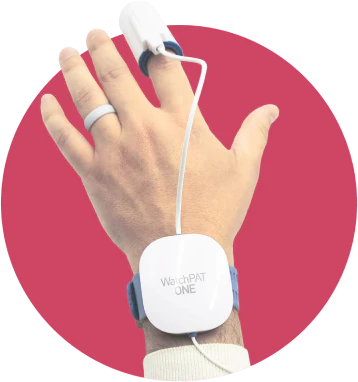
A PSG is painless. You will go to sleep as usual. The staff at the sleep center will monitor your sleep throughout the night. The results of your PSG will be analyzed by a sleep medicine specialist to see if you have sleep apnea, how severe it is, and what treatment may be recommended. In certain circumstances, the PSG can be done at home. A home monitor can be used to record your heart rate, how air moves in and out of your lungs, the amount of oxygen in your blood, and your breathing effort. For this test, a technician will come to your home and help you apply the monitor that you will wear overnight. You will go to sleep as usual, and the technician will come back the next morning to get the monitor and send the results to your doctor. Once all your tests are completed, the sleep medicine specialist will review the results and work with you and your family to develop a treatment plan. In some cases, you may also need to see another physician for evaluation of:
How Is Sleep Apnea Treated? Treatment is aimed at restoring regular nighttime breathing and relieving symptoms such as very loud snoring and daytime sleepiness. Treatment will also help associated medical problems, such as high blood pressure, and reduce the risk for heart attack and stroke. Changes in Activities or Habits If you have mild sleep apnea, some changes in daily activities or habits may be all that are needed:
People with moderate or severe sleep apnea will need to make these changes as well. They also will need other treatments, such as the following. Continuous Positive Airway Pressure Continuous positive airway pressure (CPAP) is the most common treatment for sleep apnea. For this treatment, you wear a mask over your nose during sleep. The mask blows air into your throat at a pressure level that is right for you. The increased airway pressure keeps the throat open while you sleep. The air pressure is adjusted so that it is just enough to stop the airways from briefly getting too small during sleep. Treating sleep apnea may help you stop snoring. Stopping snoring does not mean that you no longer have sleep apnea or that you can stop using CPAP. Sleep apnea will return if CPAP is stopped or if it is not used correctly. Usually, a technician comes to your home to bring the CPAP equipment. The technician will set up the CPAP machine and make adjustments based on your doctor’s orders. CPAP treatment may cause side effects in some people. Some side effects are:
If you are having trouble with CPAP side effects, work with your sleep medicine specialist and technician. Together you can do things to reduce these side effects, such as:
People with severe sleep apnea symptoms generally feel much better once they begin treatment with CPAP. When using CPAP, it is very important that you follow up with your doctor. If you are having side effects, talk to your doctor. Mouthpiece A mouthpiece (oral appliance) may be helpful in some people with mild sleep apnea. Some doctors may also recommend this if you snore loudly but do not have sleep apnea. A custom-fit plastic mouthpiece will be made by a dentist or orthodontist. An orthodontist is a specialist in correcting teeth or jaw problems. The mouthpiece will adjust your lower jaw and your tongue to help keep the airway in your throat open while you are sleeping. Air can then flow easily into your lungs because there is less resistance to breathing. Possible side effects of the mouthpiece include damage to your:
Follow up with your dentist or orthodontist to check for any side effects and to be sure that your mouthpiece fits. Surgery Some people with sleep apnea may benefit from surgery. The type of surgery depends on the cause of the sleep apnea.
Other possible surgeries for some people with sleep apnea include:
Currently, there are no medicines for the treatment of sleep apnea. Living With Sleep Apnea Getting treatment for sleep apnea and following your doctor’s advice can help you and your family members.
What Can Family Do To Help? Often, people with sleep apnea do not know they have it. They are not aware that their breathing stops and starts many times while they are sleeping. Family members or bed partners are usually the first ones to notice that the person snores and stops breathing while sleeping. There are many things family members can do to help a loved one who has sleep apnea, including:
Sleep apnea can be very serious. People with sleep apnea are at higher risk for car crashes, work-related accidents, and other medical problems due to their sleepiness. It is important that people with sleep apnea see their doctor to treat and control this disorder. Treatment may improve a person’s overall health and happiness as well as the quality of sleep for both the person and the entire family. Above courtesy of NHLBI
Below - original contribution.
Sleep
Apnea: An Overview
WHAT IS SLEEP APNEA? Sleep apnea is defined as an interruption in breathing during sleep. Usually when we are awake and conscious, we are aware of our breathing process and we can control the rate and rhythm of breathing. During sleep, breathing is controlled by the respiratory brain centers. It is a totally involuntary action which can not be controlled by one’s will. In sleep apnea, there is interference in the normal regular breathing process during sleep. WHAT IS OBSTRUCTIVE SLEEP APNEA? By the word obstructive, it is meant that some part of the lumen of the respiratory tract is narrowed to such an extent that it partially or completely collapses and the breathing process is interfered or comes to a halt. It usually involves the throat region. HOW COMMON IS OBSTRUCTIVE SLEEP APNEA? Obstructive sleep apnea is a common condition. About 4% of adults are diagnosed with Obstructive sleep apnea in America - about 1 in every 25 Americans. Obstructive sleep apnea has a high prevalence among the general population, despite that 80% of people with this disorder are left undiagnosed. This is because many people suffering from Obstructive sleep apnea are either unaware of their problem or neglect their condition and do not bother to complain whilst still facing the consequences of this disorder. WHO SUFFERS FROM OBSTRUCTIVE SLEEP APNEA? Though believed to be a disorder of the general population, Obstructive sleep apnea is seen more in overweight individuals. Nevertheless, it may also be seen in individuals of normal weight who have other anatomic findings. People who suffer from enlarged tonsils and adenoids, macroglossia (enlarged tongue) or abnormal positioning of the maxilla and mandible, are also prone to suffer from Obstructive sleep apnea. Recent studies have shown that Obstructive sleep apnea is also seen frequently in patients suffering from congestive heart failure. Alcohol use has also been documented as one of the risk factors for Obstructive sleep apnea. DOES OBSTRUCTIVE SLEEP APNEA AFFECT CHILDREN ALSO? Yes, Obstructive sleep apnea may affect children as well. Many studies have been conducted by comparing different child age groups for the presence of this disorder. Enlarged tonsils and adenoids along with obesity are contributing factors to acquire Obstructive sleep apnea in children. HOW DO I KNOW THAT I’M SUFFERING FROM OBSTRUCTIVE SLEEP APNEA?
DOES OBSTRUCTIVE SLEEP APNEA LEAD TO OTHER PROBLEMS? Besides badly altering the quality of life, Obstructive sleep apnea gives rise to a number of moderate to severe medical conditions like Hypertension, Angina, Nocturnal cardiac arrhythmias, Myocardial infarction, Stroke, Emotional problems, Depression, Mood disorders, Poor memory, Irritability and motor vehicle accidents due to daytime drowsiness. WHICH TESTS SHOULD BE DONE TO CONFIRM OBSTRUCTIVE SLEEP APNEA?
HOW TO TREAT OBSTRUCTIVE SLEEP APNEA?
If above measures fail or if the disease is severe, then Obstructive sleep apnea requires specific treatment which consists of following measures:
Most patients with Obstructive sleep apnea can be treated effectively by one of the above methods of treatment, but some may require more than one modality of treatment.
|