Obstructive Sleep Apnea |
||||
What Is Sleep Apnea? Sleep apnea is a common disorder that can be very serious. In sleep apnea, your breathing stops or gets very shallow while you are sleeping. Each pause in breathing typically lasts 10 to 20 seconds or more. These pauses can occur 20 to 30 times or more an hour. The most common type of sleep apnea is obstructive sleep apnea. During sleep, enough air cannot flow into your lungs through your mouth and nose even though you try to breathe. When this happens, the amount of oxygen in your blood may drop. Normal breaths then start again with a loud snort or choking sound. When your sleep is upset throughout the night, you can be very sleepy during the day. With sleep apnea, your sleep is not restful because:
People with sleep apnea often have loud snoring. However, not everyone who snores has sleep apnea. Some people with sleep apnea don’t know they snore.
Untreated sleep apnea can increase the chance of having high blood pressure and even a heart attack or stroke. Untreated sleep apnea can also increase the risk of diabetes and the risk for work-related accidents and driving accidents. What Causes Sleep Apnea? Sleep apnea happens when enough air cannot move into your lungs while you are sleeping. When you are awake, and normally during sleep, your throat muscles keep your throat open and air flows into your lungs. In obstructive sleep apnea, however, the throat briefly collapses, causing pauses in your breathing. With pauses in breathing, the oxygen level in your blood may drop. This happens if the following conditions occur:
With the throat frequently fully or partly blocked during sleep, enough air cannot flow into your lungs, even though your efforts to breathe continue. Your breathing may become hard and noisy and may even stop for short periods of time (apneas). Central apnea is a rare type of sleep apnea that happens when the area of your brain that controls your breathing doesn’t send the correct signals to the breathing muscles. Then there is no effort to breathe at all for brief periods. Snoring does not typically occur in central apnea. Who Is At Risk for Obstructive Sleep Apnea? Anyone can have obstructive sleep apnea. It is estimated that more than 12 million Americans have obstructive sleep apnea. More than half the people who have sleep apnea are overweight, and most snore heavily. Sleep apnea is more common in men. One out of 25 middle-aged men and 1 out of 50 middle-aged women have sleep apnea that causes them to be very sleepy during the day. Sleep apnea is more common in African Americans, Hispanics, and Pacific Islanders than in Caucasians. If someone in your family has sleep apnea, you are more likely to develop it than someone without a family history of the condition. Adults who are most likely to have sleep apnea:
Obstructive sleep apnea can also occur in children who snore. If your child snores, you should discuss it with your child’s doctor or health care provider. What Are the Signs and Symptoms of Sleep Apnea? The most common signs of sleep apnea are:
Your family members may notice the symptoms before you do. Otherwise, you will likely not be aware that you have problems breathing while you are asleep. Others signs of sleep apnea may include:
How Is Sleep Apnea Diagnosed? Your doctor will do a physical exam and take a medical history that includes asking you and your family questions about how you sleep and how you function during the day. As part of the exam, your doctor will check your mouth, nose, and throat for extra or large tissues; for example, tonsils, uvula (the tissue that hangs from the middle of the back of the mouth), and soft palate (the roof of your mouth in the back of your throat). Your doctor may order a sleep recording of what happens with your breathing while you sleep. A sleep recording is a test that is often done in a sleep center or sleep laboratory, which may be part of a hospital. You may stay overnight in the sleep center, although sleep studies are sometimes done in the home. The most common sleep recording used to find out if you have sleep apnea is called a polysomnogram (poly-SOM-no-gram), or PSG. This test records:
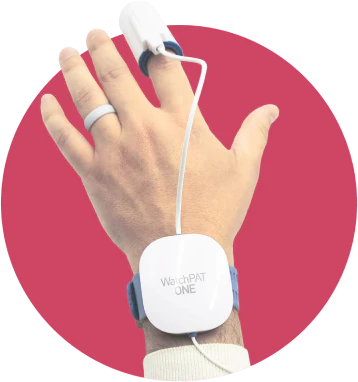
A PSG is painless. You will go to sleep as usual. The staff at the sleep center will monitor your sleep throughout the night. The results of your PSG will be analyzed by a sleep medicine specialist to see if you have sleep apnea, how severe it is, and what treatment may be recommended. In certain circumstances, the PSG can be done at home. A home monitor can be used to record your heart rate, how air moves in and out of your lungs, the amount of oxygen in your blood, and your breathing effort. For this test, a technician will come to your home and help you apply the monitor that you will wear overnight. You will go to sleep as usual, and the technician will come back the next morning to get the monitor and send the results to your doctor. Once all your tests are completed, the sleep medicine specialist will review the results and work with you and your family to develop a treatment plan. In some cases, you may also need to see another physician for evaluation of:
How Is Sleep Apnea Treated? Treatment is aimed at restoring regular nighttime breathing and relieving symptoms such as very loud snoring and daytime sleepiness. Treatment will also help associated medical problems, such as high blood pressure, and reduce the risk for heart attack and stroke. Changes in Activities or Habits If you have mild sleep apnea, some changes in daily activities or habits may be all that are needed:
People with moderate or severe sleep apnea will need to make these changes as well. They also will need other treatments, such as the following. Continuous Positive Airway Pressure Continuous positive airway pressure (CPAP) is the most common treatment for sleep apnea. For this treatment, you wear a mask over your nose during sleep. The mask blows air into your throat at a pressure level that is right for you. The increased airway pressure keeps the throat open while you sleep. The air pressure is adjusted so that it is just enough to stop the airways from briefly getting too small during sleep. Treating sleep apnea may help you stop snoring. Stopping snoring does not mean that you no longer have sleep apnea or that you can stop using CPAP. Sleep apnea will return if CPAP is stopped or if it is not used correctly. Usually, a technician comes to your home to bring the CPAP equipment. The technician will set up the CPAP machine and make adjustments based on your doctor’s orders. CPAP treatment may cause side effects in some people. Some side effects are:
If you are having trouble with CPAP side effects, work with your sleep medicine specialist and technician. Together you can do things to reduce these side effects, such as:
People with severe sleep apnea symptoms generally feel much better once they begin treatment with CPAP. When using CPAP, it is very important that you follow up with your doctor. If you are having side effects, talk to your doctor. Mouthpiece A mouthpiece (oral appliance) may be helpful in some people with mild sleep apnea. Some doctors may also recommend this if you snore loudly but do not have sleep apnea. A custom-fit plastic mouthpiece will be made by a dentist or orthodontist. An orthodontist is a specialist in correcting teeth or jaw problems. The mouthpiece will adjust your lower jaw and your tongue to help keep the airway in your throat open while you are sleeping. Air can then flow easily into your lungs because there is less resistance to breathing. Possible side effects of the mouthpiece include damage to your:
Follow up with your dentist or orthodontist to check for any side effects and to be sure that your mouthpiece fits. Surgery Some people with sleep apnea may benefit from surgery. The type of surgery depends on the cause of the sleep apnea.
Other possible surgeries for some people with sleep apnea include:
Currently, there are no medicines for the treatment of sleep apnea. Living With Sleep Apnea Getting treatment for sleep apnea and following your doctor’s advice can help you and your family members.
What Can Family Do To Help? Often, people with sleep apnea do not know they have it. They are not aware that their breathing stops and starts many times while they are sleeping. Family members or bed partners are usually the first ones to notice that the person snores and stops breathing while sleeping. There are many things family members can do to help a loved one who has sleep apnea, including:
Sleep apnea can be very serious. People with sleep apnea are at higher risk for car crashes, work-related accidents, and other medical problems due to their sleepiness. It is important that people with sleep apnea see their doctor to treat and control this disorder. Treatment may improve a person’s overall health and happiness as well as the quality of sleep for both the person and the entire family. Above courtesy of NHLBI
2nd article: Below - original contribution. Obstructive Sleep Apnea (OSA), also referred to simply as sleep apnea, the broader category under which it falls, is a sleeping disorder in which throat tissue collapses and obstructs the flow of air in the lungs. This is caused by the body’s natural muscle attenuation process during sleep. It is the most common form of sleep apnea, affecting as many as 20% of adults, though many cases go undiagnosed. The degree to which airflow is disrupted, and the amount of times this occurs in a typical night varies with each patient. Some patients experience only mild symptoms, often resulting in snoring, others suffer complete blockage resulting in sleep interruption, called neurological arousals. These may or may not cause complete awakening, but invariably result in sleep deprivation. OSA can strike anyone, regardless of age or gender, and is a common side effect of obesity. The increased throat tissue in these individuals raises the likelihood of more severe blockage upon muscle relaxation. Contrary to adults, OSA in children is most commonly found in those with slight builds, and is usually the result of tonsils or adenoids. Signs that you may have OSA can include restless sleep, irritability, memory loss, depression, anxiety, and sudden mood changes. Detection in children is most commonly based on extremes in energy level, be it excessive tiredness, or extreme hyper behaviour. The most universal and easily detectable sign of OSA in adults is snoring, a direct result of the decreased air circulation through the lungs. It should be noted that snoring is only a possible precursor to OSA, and some snoring may be completely unrelated to OSA. If you think you may have OSA, you should contact a local sleep clinic and schedule an overnight sleep study to have your condition evaluated. OSA is a serious condition that can be potentially life threatening in the most serious instances, and should not be left undiagnosed. Your overnight stay will be monitored by a sleep technician, and is conducted with a polysomnogram test, whereby sensors are attached to various parts of the body to aid in detecting any sleep abnormalities. This can be anything from snoring, apneas and arousals, to body position and leg movements. Based on the results of this test, your doctor or the sleep technician may need to do follow-up research with you to attempt to determine the length of time you’ve been afflicted with OSA, and if any recent changes in lifestyle may have contributed to it. Weight gain and increased intake of alcohol and/or drugs are leading causes of increased levels of OSA symptoms. Once diagnosed with OSA, there are varied methods of treatment for alleviating or eliminating its occurrence. When the OSA is being caused by lifestyle choices, a simple change in lifestyle may be recommended. Avoidance of alcohol, drugs or some types of medication, all of which excessively relax the muscles during sleep, leading to airway collapse, are vital. Weight loss in heavy set individuals, and cessation of smoking in smokers are also possible cures. Specialized pillows or other devices can also be used in an attempt to keep the patient from sleeping on their back. If these conservative methods are not giving the desired results, or if it is suspected that they will not be adequate, a physical intervention will likely be necessary. The first and most widely prescribed of these is continuous positive airway pressure (CPAP). A breathing machine delivers a steady supply of air through a mask worn over the nose and mouth. The air pressure from this technique forces the airways to remain open, easing the natural breathing process. The amount of air pressure varies by patient, and will be judged by your doctor following your overnight study. In lieu of this treatment, oral appliances may be encouraged. These are cheaper forms of treatment, typically consisting of devices to hold the jaw or tongue in a set position, preventing its slide into the back of the throat during muscle relaxation. The definitive treatment for OSA is to undergo surgery, a step that may fully eliminate the ailment in patients. There are numerous forms of surgery based on the causes at the root of the OSA, and some of these surgical options are detailed below. Nasal surgery is effective for those suffering OSA through nasal obstruction or congestion, which can be caused by a deviated septum or allergies among other causes. This is more often for patients with smaller builds, who are in the relative minority of OSA patients. Having parts of the soft palate reduced or removed through laser surgery or radiofrequency waves. Increasing the size of the airway passage through tonsillectomy or adenoidectomy. This is the common procedure for children suffering with OSA. Surgical repositioning of the lower jaw, setting it in a more forward position, forcing the tongue away from the back of the throat where it blocks the airflow during sleep. In more serious cases, a procedure similar to this, involving movement of both the upper and lower jaw may be attempted. If you suspect you or someone you know is suffering with OSA, it is recommended not to downplay the syndrome, but to have it looked at and diagnosed by a professional. Poor sleep habits can have detrimental effects on all aspects of your life, and could be corrected with minimal steps or procedures.
|